



Saïd Business School: How to Avoid Another Financial Crisis – Research from Futures Experts Suggest ‘Business as Usual’ Should not be an Option
Monday, 25 January 2010 | Leadership in Finance
The impact of the financial crisis is still reverberating through the global economy and the political sphere, and is affecting the lives of millions. Meanwhile, the debate continues – albeit with less urgency – about what happened, what we should have seen coming, what we can learn for the future and what we do now. No real answers are forthcoming, though knee-jerk responses such as stimulus packages and calls for more regulation abound.
A new study from the Beyond the Financial Crisis Scenario Group led by Dr Angela Wilkinson, Director, Futures Research and Scenario Planning, Institute for Science, Innovation and Society (InSIS), at the Saïd Business School, University of Oxford reassesses the real causes and nature of the financial crisis and reveals the mind-sets and behaviours which make us still vulnerable to further crises of similar magnitude and equally devastating consequences. So far, it seems, we have learned little from the financial crisis.
The report sets out new approaches to understanding what really happened and to developing a deeper understanding of risk. It highlights the flawed thinking which underpins much of the financial sector and proposes new ways of thinking to engage uncertainty and better prepare us for an uncertain future.
The report shows:
•It was not the subprime mortgage problem that ‘caused’ the credit crunch, but it was that which triggered an overall system crisis because all financial markets were build on the same shaky foundations as the subprime market.
•The financial crisis was not a one off event but heralds the prospect of other systemic failures because equally flawed approaches to strategic foresight underpin the management of other systems
•There has been a significant misunderstanding of both systemic risk and risk in general, in our financial services. The way in which risk was priced by financial services organisations did not allow for all costs, and organisations retained insufficient capital to carry the full cost of the market systemic risk.
•Early warning signs and dissenting voices were overlooked and will continue to be disregarded in future unless we address some of the fundamental flaws inherent in our financial systems.
•The standard model of economics is shown to be defunct. The economic tenets upon which much of the financial sector rests, such as the Efficient Market Hypothesis, linear causality and common means of calculating market volatility, are no longer fit-for-purpose in the messy, complex and quickly evolving environment which is the 21st century market.
•The deep seated assumptions which underpin decision-making, such as over confidence in quantitative analysis and a faith in the moral behaviours of economic agents, should be articulated and scrutinised.
•We need to become more comfortable with acknowledging uncertainty and the limits of our understanding of many financial instruments, and to address the socially constructed ignorance which pervades our financial institutions.
The report offers two scenarios based on the financial crisis as a means of stimulating deeper reflection about the nature of risk, uncertainty and the way we manage our world. By developing two possible stories of how we can move past the credit crunch and into the future, these scenarios aim to spur new ways of thinking and a new approach to the action we decide to take in the aftermath.
These two scenarios – Growth and Health – aim to encourage the world to remain open to a change of mind about the nature of the problems it faces and the range of decisions and actions that are available. The first path Growth is characterised by familiar financial assumptions and tools but with a greater degree of oversight and transparency, accompanied by a shift in regulatory structures and culture. The second path Health is based on a profound shift of emphasis from financial opportunities to the health of the financial system as a whole and its interdependency with other systems. Taken together, the two scenarios present a toolset or framework for developing a greater understanding of systemic risk.
Notes
1. About the project
The ‘Beyond the Financial Crisis’ Scenario project arose as a collaboration of a small group of participants from the second Oxford Futures Forum (http://www.oxfordfuturesforum.org.uk/). The scenario group comprises: Dr Angela Wilkinson, Director, Futures Research and Scenario Planning, InSIS, Saïd Business School, University of Oxford; Betty Sue Flowers, University of Texas, Emeritus; Roland Kupers, Royal Dutch Shell; Diana Mangalagiu, Reims Management School and University of Oxford; Rafael Ramirez, James Martin Senior Research Fellow in Futures, InSIS; Jerome Ravetz, Associate Fellow, InSIS; John Selsky, University of South Florida; Christopher Wasden, PriceWaterhouseCoopers and Cesar Aya, Research Assistant, InSIS.
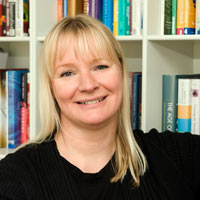
Angela Wilkinson Saïd Business School
2. About Angela Wilkinson
http://www.sbs.ox.ac.uk/research/people/Pages/AngelaWilkinson.aspx
3. About the Institute for Science, Innovation and Society (Insis)
The Institute focuses on research, policy development and teaching programmes which provide new approaches to understanding technological and social change: http://www.sbs.ox.ac.uk/centres/insis/Pages/default.aspx
4. About Saïd Business School
Established in 1996 the Saïd Business School is one of Europe’s youngest and most entrepreneurial business schools with a reputation for innovative business education. An integral part of Oxford University, the School embodies the academic rigour and forward thinking that has made Oxford a world leader in education. The School has an established reputation for research in a wide range of areas, including finance and accounting, organisational analysis, international management, strategy and operations management. The School is dedicated to developing a new generation of business leaders and entrepreneurs and conducting research not only into the nature of business, but the connections between business and the wider world. In the Financial Times ranking of MBA programmes (Jan 10) Saïd is ranked 16th in the world. It is ranked in BusinessWeek’s top 10 business schools outside the USA (Nov 08) and in the Wall Street Journal it is ranked in the top 25 business schools in the world (Nov 07). In the UK university league tables it has ranked first of all UK universities for undergraduate business for the past six years in The Guardian and in seven of the last eight years in The Times. For more information, see http://www.sbs.ox.ac.uk/
Categories: Leadership in Finance


 The Future Leadership Institute